
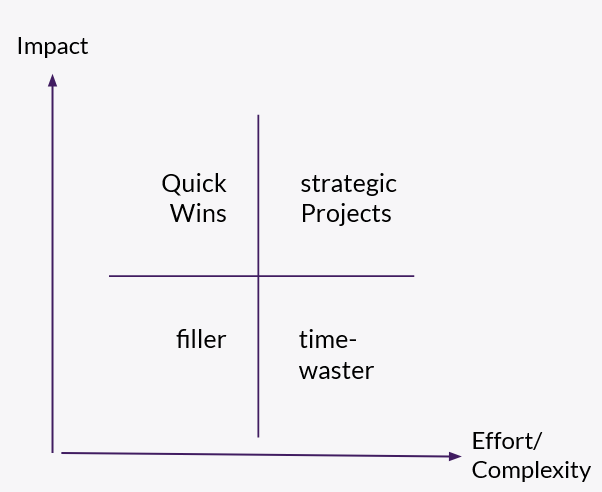
A simple matric like this can help decide where to start, by placing the proposed action on the Axis.
Use this matrix2 to rank potential entry points based on their strategic impact versus the feasibility/resource effort required
Define the Foresight Mode: Choose a participation level2 based on organizational goals:
- Non-Participative: Exclusive to executives and specialists.
- Participative: Includes a chosen group of senior stakeholders.
- Collaborative: Purposeful inclusion of employees, partners, and customers.
- Open: Organization-wide participation enabled for all stakeholders.
Functional Anchors: Common approaches include starting within R&D departments, establishing micro-routines, or looking at “Future Time” during retrospectives
Leverage Point Hierarchy (Meadows’ Framework): When evaluating entry points in the matrix, rank them by their leverage within the system:
- High Leverage (Deep Change): Interventions that change the goals of the system or the mindset/paradigm (e.g., rewriting the corporate mission to prioritize 10-year foresight).
- Medium Leverage (Structural Change): Interventions that change the rules of the system (e.g., new incentives for innovative ideas) or information flows (e.g., making trend data accessible to all teams).
- Low Leverage (Adjustments): Simple changes to parameters (e.g., increasing the budget for trend reports) which, while common, rarely change overall behavior.