
Learn how responsible innovation connects ethical intentions with clear roles, safeguards and accountability.
Concepts to understand Before starting this lesson
- Responsible innovation
Innovation that considers benefits, risks, people, society, and long-term consequences.
- Human impact
The effect a decision may have on people’s work, well-being, trust, access, safety, or autonomy.
- Stakeholder
A person or group affected by a decision, directly or indirectly.
- Accountability
Being able to explain who made a decision, why it was made, and how its effects will be reviewed.
Why Ethical Governance and Accountability Matter
Technology decisions often move quickly…..
A new tool, platform, AI system, data process, or automation idea may look useful, but still create unintended effects for employees, customers, partners, or communities.
Ethical governance helps organisations avoid situations where:
- nobody knows who is responsible;
- human impacts are noticed too late;
- risks are discussed but not documented;
- affected people are not consulted;
- a pilot continues without review;
- problems appear but no one knows who should act.
Key idea:
Ethical governance turns responsible innovation from a good intention into a clear decision process.
To manage these impacts, an organisation needs a way to organise ethical decisions.
What Is Ethical Governance?
Ethical governance is the way an organisation structures, documents, monitors, and reviews decisions that may affect people, society, trust, or long-term strategy.
It answers the question:
“How do we make sure this decision is responsible, not just technically possible?”
Ethical governance does not stop innovation. It makes innovation safer, clearer, and easier to improve.
How Ethical Governance Works
Ethical governance includes:
Rules
What must be checked before the decision moves forward?
Roles
Who owns the decision? Who must be consulted?
Evidence
What information supports the decision?
Safeguards
What protections are needed before implementation?
Review
When will the decision be checked again
Governance establishes a process; accountability makes responsibility clear.
What Is Accountability?
Accountability means being able to answer for a decision before, during, and after it is implemented.
A team is accountable when it can explain:
- what was decided;
- why it was decided;
- who was involved;
- who may be affected;
- what human impacts were considered;
- what safeguards were added;
- when the decision will be reviewed;
- who must act if problems appear.
An accountability gap appears when that responsibility is unclear.
Accountability Gap
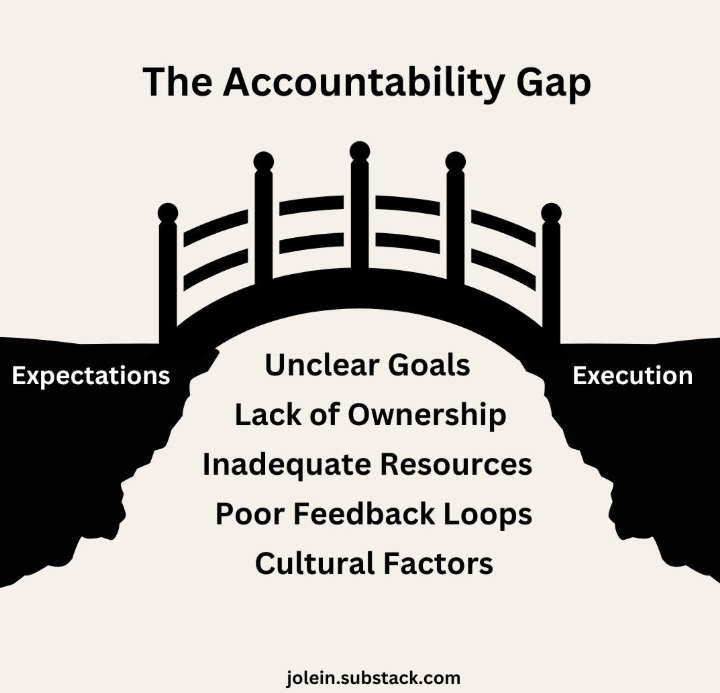
An accountability gap appears when a decision affects people, but nobody clearly owns the decision or its consequences.
Example
A company introduces an automated customer service tool. Customers receive wrong answers, staff do not know who should correct them, and managers cannot explain who reviewed the tool before launch.
That is an accountability gap.
Governance and accountability therefore work together to support responsible innovation.
Governance, Accountability, and Responsible Innovation
Responsible innovation gives the organisation the principles. →
Ethical governance turns those principles into a process.→
Accountability makes sure someone can explain and review the decision.
| Concept | Main question | Practical role |
| Responsible innovation | Are we considering people, values, risks, and long-term effects? | Gives the ethical direction. |
| Ethical governance | How do we make and review this decision responsibly? | Creates the structure. |
| Accountability | Who is answerable for the decision and its effects? | Creates ownership and follow-up. |
Responsible innovation without governance may stay abstract. Governance without accountability may become paperwork. Accountability connects the decision to real action.
With the roles clear, the next question is what the review should examine.
What Ethical Governance Should Check
Before an innovation moves forward, governance should check five areas.
1. Purpose
What is the innovation trying to improve?
2. People
Who may benefit, be harmed, or be excluded?
3. Power
Who can approve, challenge, pause, or stop the decision?
4. Protection
What safeguards are needed?
5. Proof
What evidence will show whether the decision is working responsibly?
Practical rule
The stronger the possible human impact, the clearer the governance and accountability process should be.
Those checks need to include the people affected by the decision.
Human Impacts as Part of Accountability
Human impacts are not separate from governance. They are one of the main things governance must identify, document, and review.
When technology is introduced, accountability should cover possible effects on:
Work:
Does it change workload, roles, skills, or job quality?
Trust:
Does it affect how people trust the organisation or the technology?
Access:
Could some people be excluded because of language, disability, cost, location, or digital skills?
Well-being:
Could it increase stress, pressure, monitoring, or uncertainty?
Autonomy:
Does it reduce people’s ability to choose, question, or override decisions?
Fairness:
Could it treat groups differently or create unequal outcomes?
Data and identity:
Does it affect how people’s data, identity, or digital profile is collected, used, shared, or controlled?
Key idea
A responsible organisation does not only ask whether a technology works. It asks how the technology affects people, and who is responsible for responding.
These principles need a practical process. Next, apply the governance checkpoint to an AI scheduling example.