
Breaking down silos creates the conditions for collaborative foresight. But conditions alone are not enough. For a group to think well together about the future, people also need to understand what they are each contributing — and to trust one another enough to contribute honestly.

Why Trust Is the Foundation of Foresight
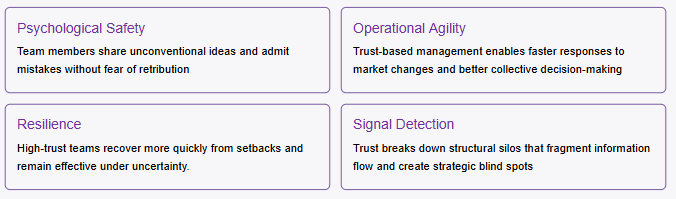
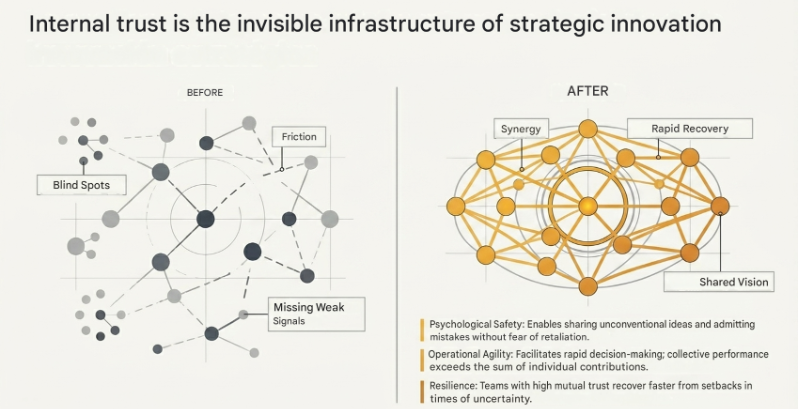
Strategic foresight only works when teams can think openly together. Trust creates the conditions for that to happen.
Activity: Treasure Box
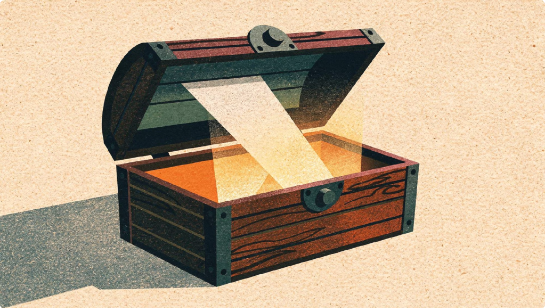
A structured peer-recognition exercise that embeds appreciation into everyday team interactions — building trust gradually over the foresight programme.
- Participants deposit short notes recognising peers’ strengths, skills, and positive behaviours into a shared box
- Notes are read aloud at team meetings; facilitator guides reflection on patterns of strength across the group
- Embeds appreciation into everyday interactions — building trust gradually over the foresight exercise
Time: 60 min | Individual & group setting
Activity: Gossip of Resources
- Cross-functional, cross-hierarchical triads: two participants discuss the “Listener’s” strengths as if they’re not in the room
- Sentence starters keep feedback positive, specific, and grounded in observed professional behaviour
- Closes with an operational pivot: assign the Listener’s identified strength to a real task in the upcoming foresight exercise
Time: 60–90 min | Group setting
Why a Shared Foresight Language Matters
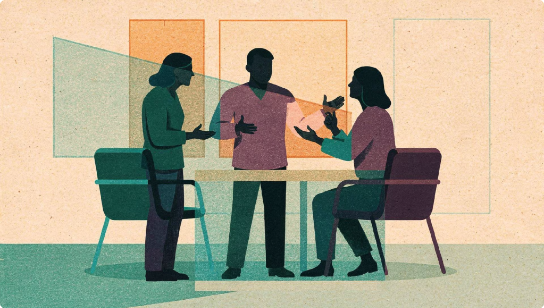
Reduces Misinterpretation: Eliminates “us vs. them” dynamics — provides a common narrative for constructive discussion
Dismantles Perceptual Barriers: Ensures no team member is marginalised by jargon or technical exclusion
Creates Inclusion: Creates an environment where members feel “seen” and “heard,” reducing disconnection from shared goals
Activity: Babel Tower & Elephant in the Room
🗼 Babel Tower
Build a structure without a shared language — surfaces how cultural backgrounds and implicit assumptions shape group dynamics and problem-solving
🐘 Elephant in the Room
Name unspoken norms, biases, and power dynamics that influence how people speak — or stay silent — in teams
Time: 45–90 min each | Small groups