
Use these tools to revisit your decision and explore the original sources in more detail.
Decision canvas
Record your reasoning using the questions already introduced in the module.
| Part of the decision | What to record |
|---|---|
| Decision and uncertainty | What choice is required? What remains unknown? |
| Assumptions and evidence | What must be true? How dependable is the evidence? |
| Options and trade-offs | What alternatives exist? What does each gain or give up? |
| Justification | Because – But – Therefore – With. |
| Review | What signal would prompt a change, and who will review it? |
Risk–Opportunity Matrix
Use priority score = likelihood × impact to organise attention, then compare the options and safeguards. The 1–5 ratings are judgements, not measured probabilities.
| Item | Risk or opportunity | Likelihood (1–5) | Impact (1–5) | Score | Assumption or safeguard |
|---|---|---|---|---|---|
| Your first item | … | … | … | … | … |
| Your next item | … | … | … | … | … |
Scenario prompts
- Quantum threats: compare an early breakthrough, a late breakthrough, a gradual transition and no breakthrough. What response remains useful across the cases?
- AI assistant: revisit the confidential client document and invented regulation. Which controls address each failure?
- Red and blue teams: challenge a defensive assumption, explain the response and identify a review trigger.
Supporting illustrations from the quantum lesson
View the original illustrations
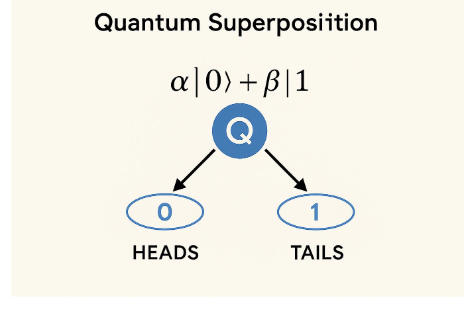
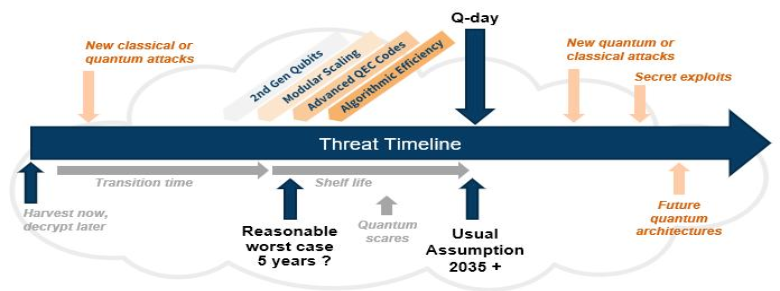
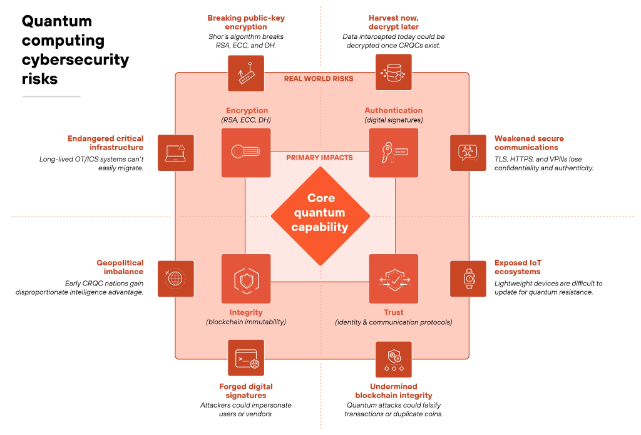
Recommended reading and references
Section A: Uncertainty
References
View References
Knight, F. H. (1921). Risk, Uncertainty and Profit. Houghton Mifflin.
Duncan, R. B. (1972). Characteristics of organizational environments and perceived environmental uncertainty. Administrative Science Quarterly, 17(3), 313–327.
Tversky, A., & Kahneman, D. (1974). Judgment under uncertainty: Heuristics and biases. Science, 185(4157), 1124–1131.
Kahneman, D., & Tversky, A. (1979). Prospect theory: An analysis of decision under risk. Econometrica, 47(2), 263–291.
Milliken, F. J. (1987). Three types of perceived uncertainty about the environment: State, effect, and response uncertainty. Academy of Management Review, 12(1), 133–143.
Samuelson, W., & Zeckhauser, R. (1988). Status quo bias in decision making. Journal of Risk and Uncertainty, 1, 7–59.
Nickerson, R. S. (1998). Confirmation bias: A ubiquitous phenomenon in many guises. Review of General Psychology, 2(2), 175–220.
Moore, D. A., & Healy, P. J. (2008). The trouble with overconfidence. Psychological Review, 115(2), 502–517.
Walker, W. E., Harremoës, P., Rotmans, J., van der Sluijs, J. P., van Asselt, M. B. A., Janssen, P., & Krayer von Krauss, M. P. (2003). Defining uncertainty: A conceptual basis for uncertainty management in model-based decision support. Integrated Assessment, 4(1), 5–17.
Further Reading
View Further Reading
Courtney, H., Kirkland, J., & Viguerie, P. (1997). Strategy under uncertainty. Harvard Business Review, 75(6), 66–79.
Schoemaker, P. J. H. (1995). Scenario planning: A tool for strategic thinking. Sloan Management Review, 36(2), 25–40.
March, J. G., & Shapira, Z. (1987). Managerial perspectives on risk and risk taking. Management Science, 33(11), 1404–1418.
Makridakis, S., Hogarth, R. M., & Gaba, A. (2009). Forecasting and uncertainty in the economic and business world. International Journal of Forecasting, 25(4), 794–812.
Taleb, N. N. (2007). The Black Swan: The Impact of the Highly Improbable. Random House.
Section B: Decision-making methods
References
View References
Source lesson plan: Module 4_3 — Decision-Making Methods, sections 3.1 and 3.2, especially slides 6–27. The phishing example and vendor-demo activity come from this presentation.
Marchau, V. A. W. J., Walker, W. E., Bloemen, P. J. T. M., & Popper, S. W. (Eds.). (2019). Decision Making under Deep Uncertainty. Book.
Lempert, R. J., Popper, S. W., & Bankes, S. C. (2003). Shaping the Next One Hundred Years: New Methods for Quantitative, Long-Term Policy Analysis. RAND publication.
Background definitions: NIST phishing glossary and NIST Zero Trust Architecture.
Section C: Risk–Opportunity Matrix
Further Reading
View Further Reading
For learners who would like to explore the concepts in more detail:
- ISO 31000:2018 — Risk Management Guidelines
General principles and guidance for identifying, analysing, evaluating, and treating risk.
https://www.iso.org/standard/65694.html - IEC 31010:2019 — Risk Assessment Techniques
An overview of techniques that can support systematic risk assessment.
https://www.iso.org/standard/72140.html - NIST SP 800-30 Rev. 1 — Guide for Conducting Risk Assessments
Practical guidance for identifying and assessing risks.
https://csrc.nist.gov/pubs/sp/800/30/r1/final - NIST AI Risk Management Framework
Particularly relevant when decisions involve artificial intelligence.
https://www.nist.gov/itl/ai-risk-management-framework - Multiple-Criteria Decision Analysis (MCDA)
A broader approach to decisions involving several competing criteria.
References
View References
Acebes, F., González-Varona, J. M., López-Paredes, A., & Pajares, J. (2024). Beyond Probability-Impact Matrices in Project Risk Management.
Belton, V., & Stewart, T. J. (2002). Multiple Criteria Decision Analysis: An Integrated Approach. Springer.
Cox, L. A. Jr. (2008). “What’s Wrong with Risk Matrices?” Risk Analysis. Paper.
IEC. (2019). IEC 31010:2019 Risk Management — Risk Assessment Techniques.
ISO. (2018). ISO 31000:2018 Risk Management — Guidelines.
Krisper, M. (2021). Problems with Risk Matrices Using Ordinal Scales. Open-access paper.
National Institute of Standards and Technology. AI Risk Management Framework.
National Institute of Standards and Technology. SP 800-30 Rev. 1: Guide for Conducting Risk Assessments.
Thomas, P., Bratvold, R. B., & Bickel, J. E. (2014). “The Risk of Using Risk Matrices.” SPE Economics & Management. Paper.
Section D: Decision trees
References
View References
ASTRAL Module 4 lesson plan: Module 4_5 — Decision Trees to Real Scenarios. Weather rules, datasets, diagrams, and the practice activity are adapted from the original slides.
Quinlan, J. R. (1986). Induction of decision trees. Machine Learning, 1, 81–106. Original research paper.
Section E: Quantum threats
- Post-Quantum Cryptography Resources, ENISA, https://www.enisa.europa.eu/topics/csirts-in-europe/glossary/post-quantum-cryptography
- Harvest Now, Decrypt Later, Cloudflare, https://www.cloudflare.com/learning/ssl/what-is-harvest-now-decrypt-later/
- Post-Quantum Cryptography Project Official PQC standardisation effort, NIST, https://csrc.nist.gov/projects/post-quantum-cryptography
- PQC Today — Post-Quantum Cryptography Migration Hub, PQC Today, https://www.pqctoday.com/
Section F: AI failure modes
Primary References:
Carlini, N. et al. (2021). “Extracting Training Data from Large Language Models.” USENIX Security Symposium. https://arxiv.org/abs/2012.07805
European Parliament (2024). EU Artificial Intelligence Act. https://artificialintelligenceact.eu/
ENISA (2023). Multilayer Framework for Good Cybersecurity Practices for AI. https://www.enisa.europa.eu/publications/multilayer-framework-for-good-cybersecurity-practices-for-ai
Case References:
Samsung AI data leak (2023): https://techcrunch.com/2023/05/02/samsung-bans-use-of-generative-ai-tools-like-chatgpt-after-april-internal-data-leak/
Air Canada chatbot liability (2024): Moffatt v. Air Canada, Civil Resolution Tribunal, British Columbia
US lawyer hallucinated citations (2023): Mata v. Avianca, Inc., US District Court, Southern District of New York
Further Reading:
NIST AI Risk Management Framework (AI RMF 1.0): https://www.nist.gov/system/files/documents/2023/01/26/AI%20RMF%201.0.pdf
Weidinger, L. et al. (2021). “Ethical and Social Risks of Harm from Language Models.” DeepMind. https://arxiv.org/abs/2112.04359
Section G: Red and blue teams
Primary References:
- IBM Security (2024). Cost of a Data Breach Report 2024. https://www.ibm.com/reports/data-breach
- MITRE ATT&CK Framework: Adversarial tactics, techniques and procedures catalogue. https://attack.mitre.org/
- NIST SP 800-115 (2008). Technical Guide to Information Security Testing and Assessment. https://csrc.nist.gov/publications/detail/sp/800-115/final
Case References:
- SolarWinds supply-chain attack (2020): FireEye (2020). “Highly Evasive Attacker Leverages SolarWinds Supply Chain.” https://www.mandiant.com/resources/blog/evasive-attacker-leverages-solarwinds-supply-chain
- Uber breach (2022): Uber Security Update, September 2022. https://www.uber.com/newsroom/security-update/
- Microsoft Midnight Blizzard (2024): Microsoft Security Blog. https://msrc.microsoft.com/blog/2024/01/microsoft-actions-following-attack-by-nation-state-actor-midnight-blizzard/
Further Reading:
- Zenko, M. (2015). Red Team: How to Succeed by Thinking Like the Enemy. Basic Books.
- Cichonski, P. et al. (2012). Computer Security Incident Handling Guide. NIST SP 800-61 Rev. 2. https://csrc.nist.gov/publications/detail/sp/800-61/rev-2/final
- Anderson, R. (2020). Security Engineering: A Guide to Building Dependable Distributed Systems (3rd ed.). Wiley. (Chapter on adversarial thinking and red teaming)