
Explore how everyday technology choices can create ethical and social dilemmas.
The Myth of Neutrality
Is “neutral” technology actually possible?
Technology is rarely a neutral vessel.
Every design choice reflects the values, biases, and priorities of its creators
“Algorithms are opinions embedded in code.” – Cathy O’Neil
A familiar camera example shows how an apparently neutral design can favour one group.
The “Camera Lens” Example

- Printing machines for color films were calibrated using “Shirley Cards”: images of white women. [1]
- Consequence: Darker skin tones were difficult to capture accurately for decades
- Not necessarily a will to exclude, but choosing a “default” introduced a bias.
From Neutral Tools to Moral Choices
After admitting that technology is not neutral, every design choice becomes a decision about what and who we value most.
When we optimise for one thing (e.g., speed), we often sacrifice another (e.g., accuracy).
Sometimes the encountered dilemmas involve ethical and social issues.
One such dilemma is whether a system’s efficiency comes at the expense of fair treatment.
Efficiency vs. Equity
AI systems are trained using historical data, including past prejudices.
This can create a feedback loop where technology reinforces existing bias
Example [2]:
- The COMPAS tool was used by the courts in USA to predict the likelihood of a defendant committing another crime.
- The obtained score influenced bail and sentencing.
- Black defendants were twice as likely to be falsely flagged as “high risk” compared to white defendants.

Fairness is not the only trade-off. A convenient service can also depend on collecting more personal data.
Convenience vs. Privacy
Collecting a lot of data is a basis for numerous technologies.
Thin line between “personalized service” and “mass surveillance” Data can be used for unintended purposes.
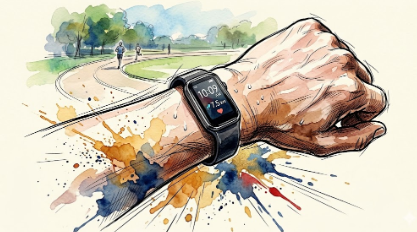
Example:
- Fitness trackers (smart watches, …) measure your sleep, heart rate, etc.
- Applications can then provide you with personalized sport or health coaching.
- This data can be bought by life insurance companies, eventually leading to insurance premium raises if you are flagged as “high risk”.
Beyond the use of data, technology can shape where people direct their attention.
Attention Economy vs. Well-Being
For social media, mobile games, … profit = engagement
Use of “persuasive technologies” (e.g., infinite scroll)
Prioritization of provocative content
Example:
- Facebook’s “like” button was designed to spread positivity
- The algorithm learned that outrage and fear actually drive more clicks and “likes” than calm, factual information.
- Extreme and polarizing content is given more prominence.

The gains from innovation can also affect the people whose work it replaces.
Innovation vs. Livelihood
Innovation can allow companies to cut costs.
New technologies may make an entire career path economically unviable.

Example [3]:
- Generative AI allows studios to scrape actors’ voice and artists’ styles to create new content faster and cheaper.
- The livelihood of the artists who spent decades mastering a craft is endangered.
These dilemmas also affect the way we protect data and people. Next, explore ethical security and digital sovereignty.