
Learn how involving different perspectives in testing can reveal discrimination, exclusion and unintended consequences.
Inclusive Red Teaming
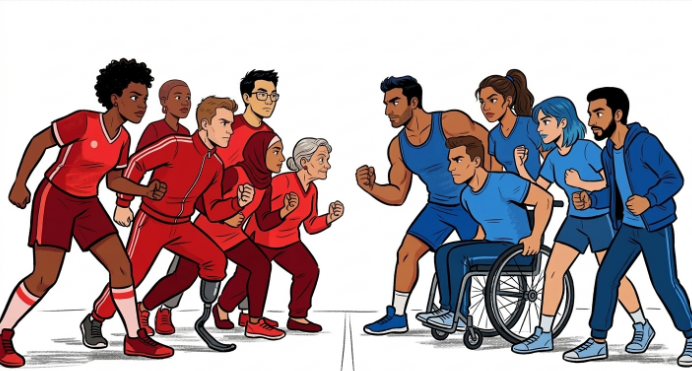
Red teaming is a way of deliberately testing a system to find weaknesses. Inclusive red teaming applies this approach to social inequalities.
- Applied to reducing social inequalities [1]
- The participant group should not involve only developers and engineers but also: sociologists, disability advocates, community leaders, etc.
Bringing these perspectives into testing helps reveal three kinds of problem.
Main goals of Inclusive Red Teaming
- Purposefully attempt to trigger the system into producing discriminatory outputs or reinforcing harmful stereotypes. Not look for bugs but for unintended consequences of the invisible assumptions in the code.
Examples:
Example: An automated moderation tool treats only one dialect, such as General American English, as “correct”.
⇒ African American Vernacular English is flagged as “incorrect” or “aggressive”.
- Credit-scoring app requiring a fixed address and high-speed stable connection to verify identity
⇒ marginalized or rural communities are excluded.
- Anticipate the evolution of technology. Identify possible feedback loops or algorithmic drifts.
Examples:- A hiring AI often replicates the “ideal” candidate profile from the past.
- Only 1 in 5 ICT specialists in Europe is a woman [2].
- The AI is trained on the résumés of the company’s top-performing engineers from the last ten years ⇒ mostly men
- ⇒ The AI might penalise women’s résumés and recommend mostly men.
If the company follows these recommendations, new hires will serve as training data for the AI and reinforce the AI’s conviction that men’s profiles are better.
- Identify how a malicious actor can exploit bias
Examples:- A reputation aggregator uses rating from various platforms (Uber, Airbnb, …) to provide a single “trust score”.
- A landlord that wants to discriminate some people uses the bias in the “trust score” to reject rental applications.
Red Team
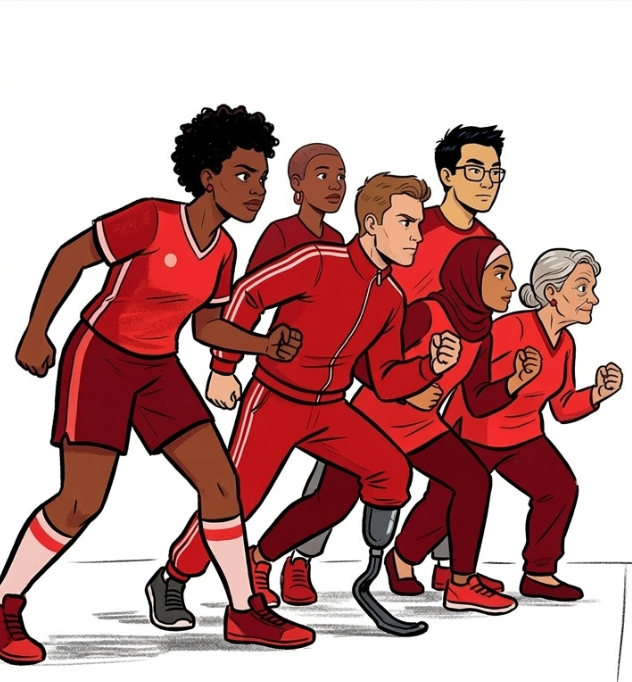
- Play the role of “social adversaries”
- Must think about possible “attacks” and their social consequences
- Identify how marginalized groups are treated compared to dominant groups
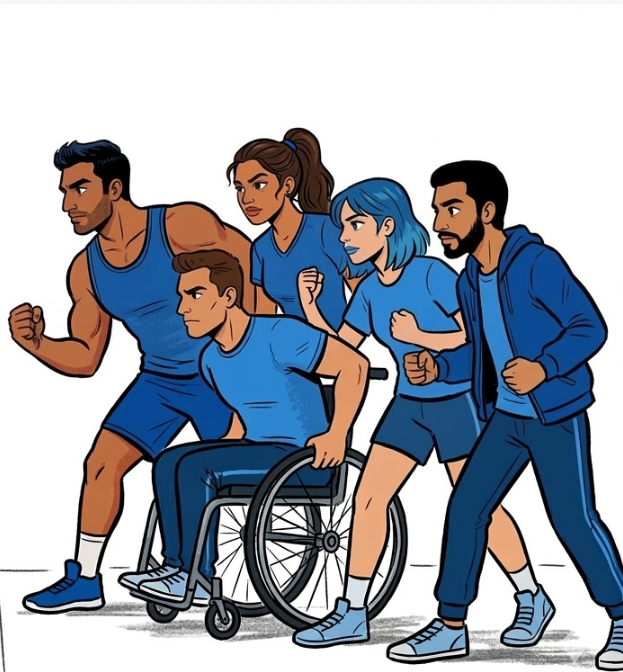
Blue Team
- Play the role of “social defenders”
- For each vulnerability identified by the red team, find safeguards to counteract it.
(Red and Blue Team can be played by the same participants.)
Testing reveals barriers; design can prevent them. Next, explore universal design and the curb-cut effect.