
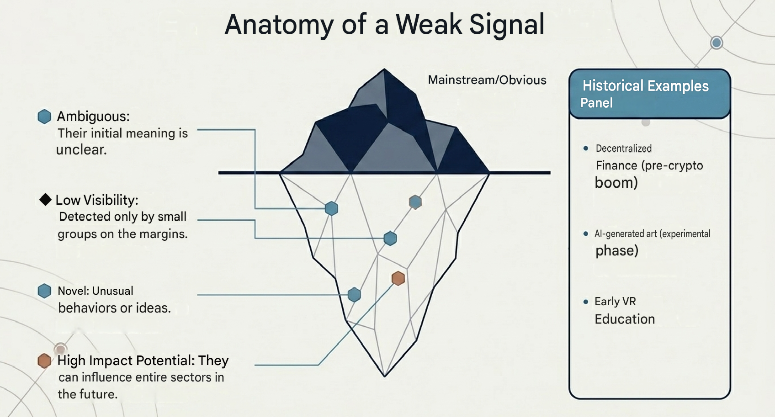
Characteristics of Weak Signals
Ambiguity: Meaning is unclear — early VR education experiments appeared niche and inconsequential at first
Limited Visibility: Only small groups notice them — early DeFi discussions happened in specialist communities long before mainstream adoption
Novelty: Unusual ideas or behaviours — AI-generated art was dismissed as marginal before reshaping creative industries
High Future Potential: Remote work tools existed long before remote work went mainstream globally — potential precedes recognition
How to Recognise Weak Signals
Observe Anomalies
Developments that don’t fit existing expectations — ask “Why is this happening? Could it spread?”
Look at the Margins
Experimental tech, alternative lifestyles, niche consumer behaviours at the edge of mainstream culture
Monitor Contradictions
Consumers demanding both convenience and sustainability signals future business model tension
Track Repetition
Similar observations across different contexts indicate emerging change worth tracking
Identify Emotional Reactions
Anxiety about automation or distrust of surveillance may signal deeper value shifts in society
Interpreting Weak Signals: From Detection to Insight
Detection alone is insufficient — the real challenge is interpretation. Ask yourself:
What does it represent?
What deeper shift or emerging dynamic might this signal point to?
Why now?
What conditions — technological, social, economic — are enabling this signal to emerge at this moment?
Who is affected?
Which stakeholders, industries, or communities could be impacted?
What follows?
What opportunities or risks may emerge if this signal develops into a trend?