Future Business Model Studio – Part 1
Grant Son (2016), a lecturer at Columbia University, designed a Startup Studio to support early-stage venture founders in working with the traditional Business Model Canvas. His approach incorporates a targeted set of questions that help entrepreneurs identify opportunities and transform business ideas into feasible ventures.
The following outlines the key steps entrepreneurs can use to apply the Startup Studio Business Model Canvas effectively within their teams:
How is an idea different from a new venture opportunity? Turn an idea into a viable venture by crafting a business model.
- Identify a strategy for targeting a market segment with a solution that will attract customers, partners, investors, key employees and other resources that will be needed to enter and gain traction in the market and create value for stakeholders.
- Value proposition will reflect the entrepreneur’s assumption for how the business model will generate cash flow
There is no single path that entrepreneurs follow as they identify the ideas that may become valuable businesses. Finding ideas is a creative process developed via:
- Personal experiences and expertise
- Network of relationships with others who offer fresh perspective
To further explore your idea, use the Business Model Canvas as your lens to evaluate the opportunity and serve as your roadmap for venture development. Continue to update the Business Model Canvas as your venture evolves.
Source: http://www.businessmodelgeneration.com/canvas/bmc
Start Up Studio: The Business Model Canvas (Grant Son,2016)
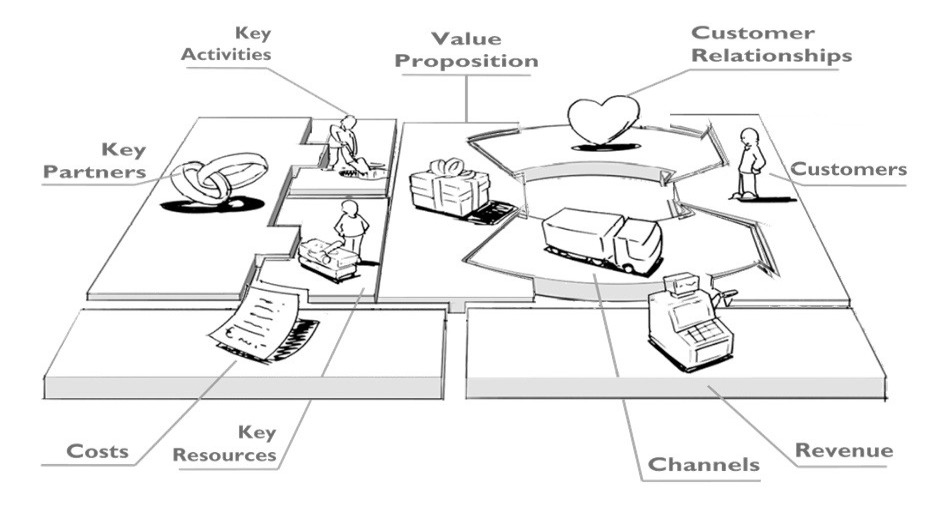
Begin with Value Proposition (top, center) and work your way around the canvas in a clock-wise di
- Value Proposition:
- What value do we deliver to the customer?
- Which one of our customer’s problems are we helping to solve?
- What bundles of products and services are we offering to each customer segment?
- Which customer needs are we satisfying?
- Customer Relationships:
- What types of relationship does each of our customer segments expect us to establish and maintain with them?
- Segments expect us to establish with them?
- Which ones have we established?
- How are they integrated with the rest of our business model?
- How costly are they?
- Channels:
- Through which channels do our customer segments want to be reached?
- How are we reaching them now?
- How are our channels integrated?
- Which ones work best?
- Which ones are most cost-efficient?
- How are we integrating them with customer routines?
- Customer Segments:
- From whom are we creating value?
- Who are our most important customers?
- Cost Structure:
- What are the most important costs inherent in our business model?
- Which key resources are most expensive?
- Which key activities are most expensive?
- Revenue Streams:
- For what value are our customers really willing to pay?
- How are they currently paying?
- How would they prefer to pay?
- How much does each revenue stream contribute to the overall revenue?
Future Business Model Studio – Part 2
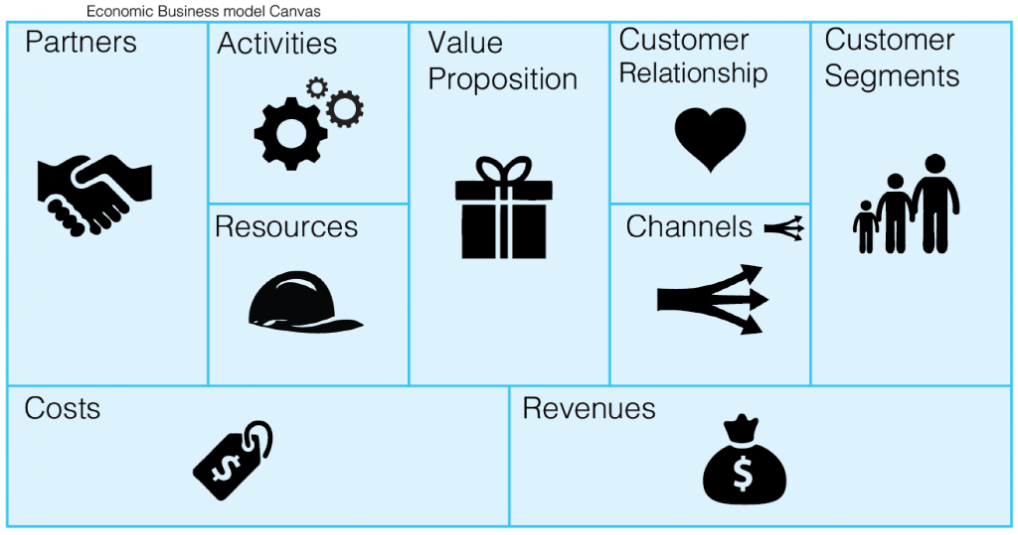
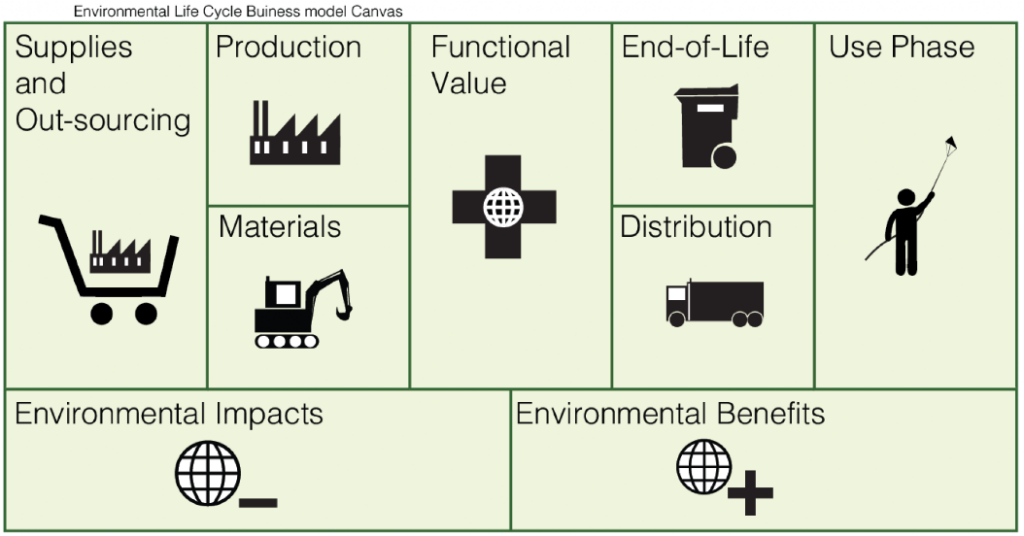
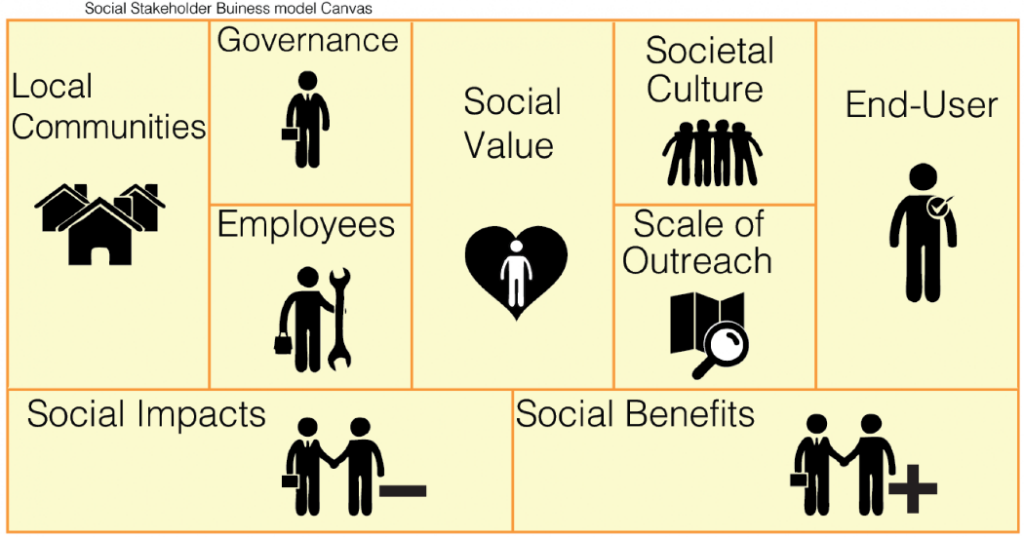
Triple Layered Business Model Canvas (Extending the Business Model Canvas) (Lüdeke-Freund, F., 2015)
Building on the traditional economic focus of the Business Model Canvas, further research has expanded the framework to incorporate environmental and social dimensions of value creation. Since 2012, this work has led to the development of the Triple Layered Business Model Canvas, introduced at the ARTEM Organizational Creativity Conference. This extended model provides startups with a structured approach to designing business models that balance economic viability with broader sustainability considerations.
Three Layers of Value Creation
- Economic Layer (original canvas)
- Revenue streams, cost structure, value proposition
- Environmental Layer
- Based on life cycle thinking
- Evaluates environmental impacts across the value chain
- Social Layer
- Based on a stakeholder approach
- Assesses social value and impact